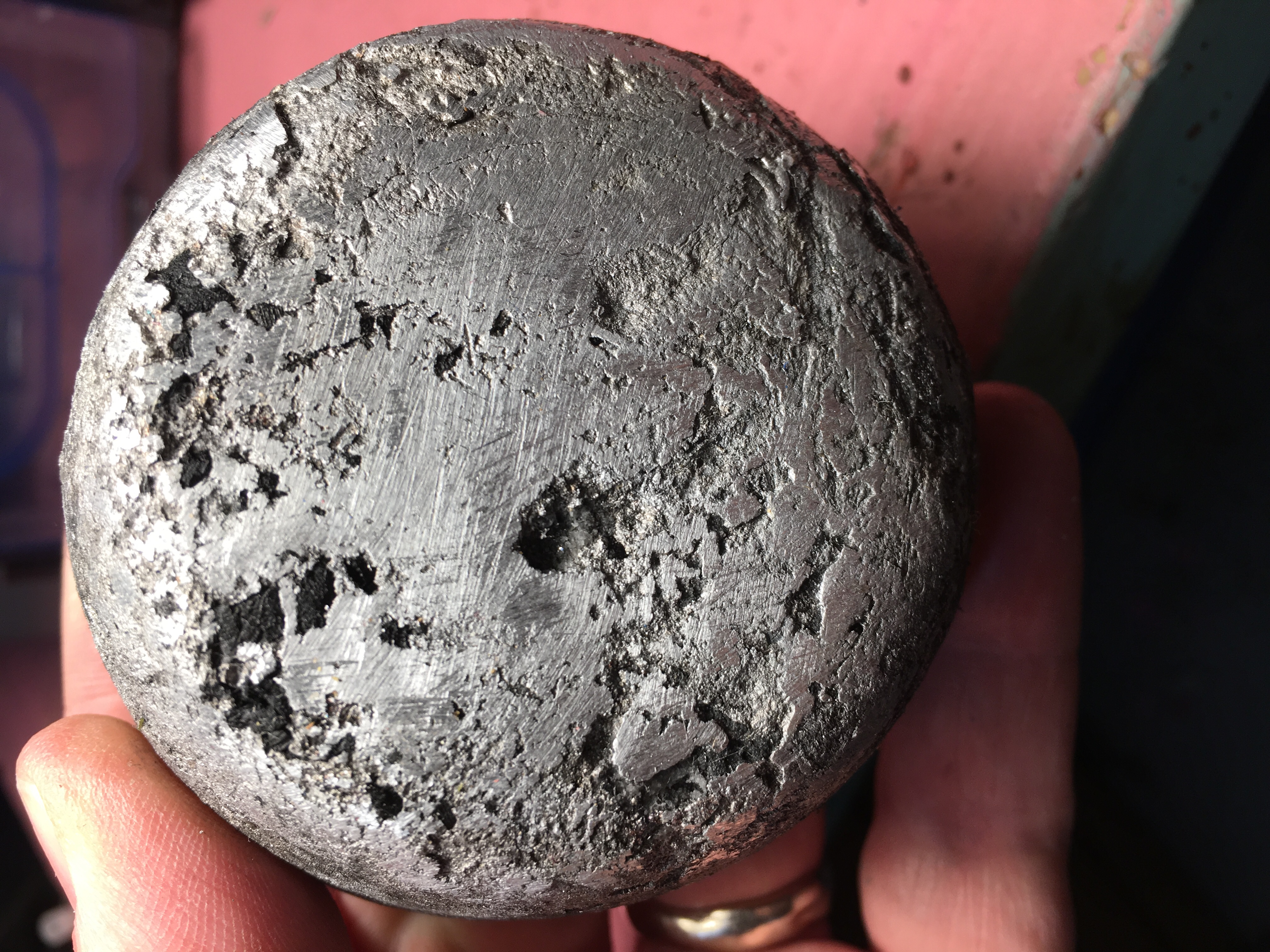
Casting tin and an aluminum melt
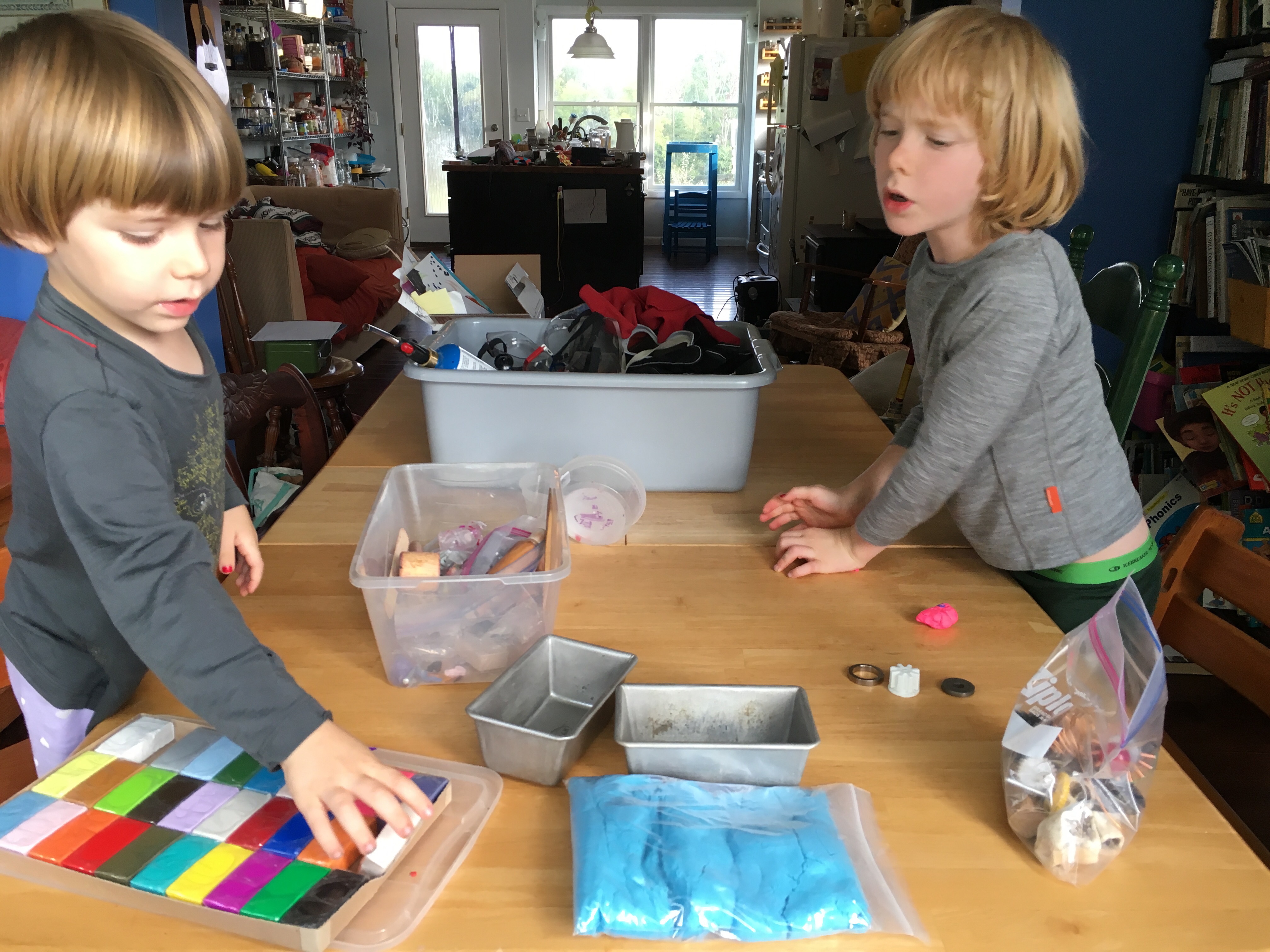
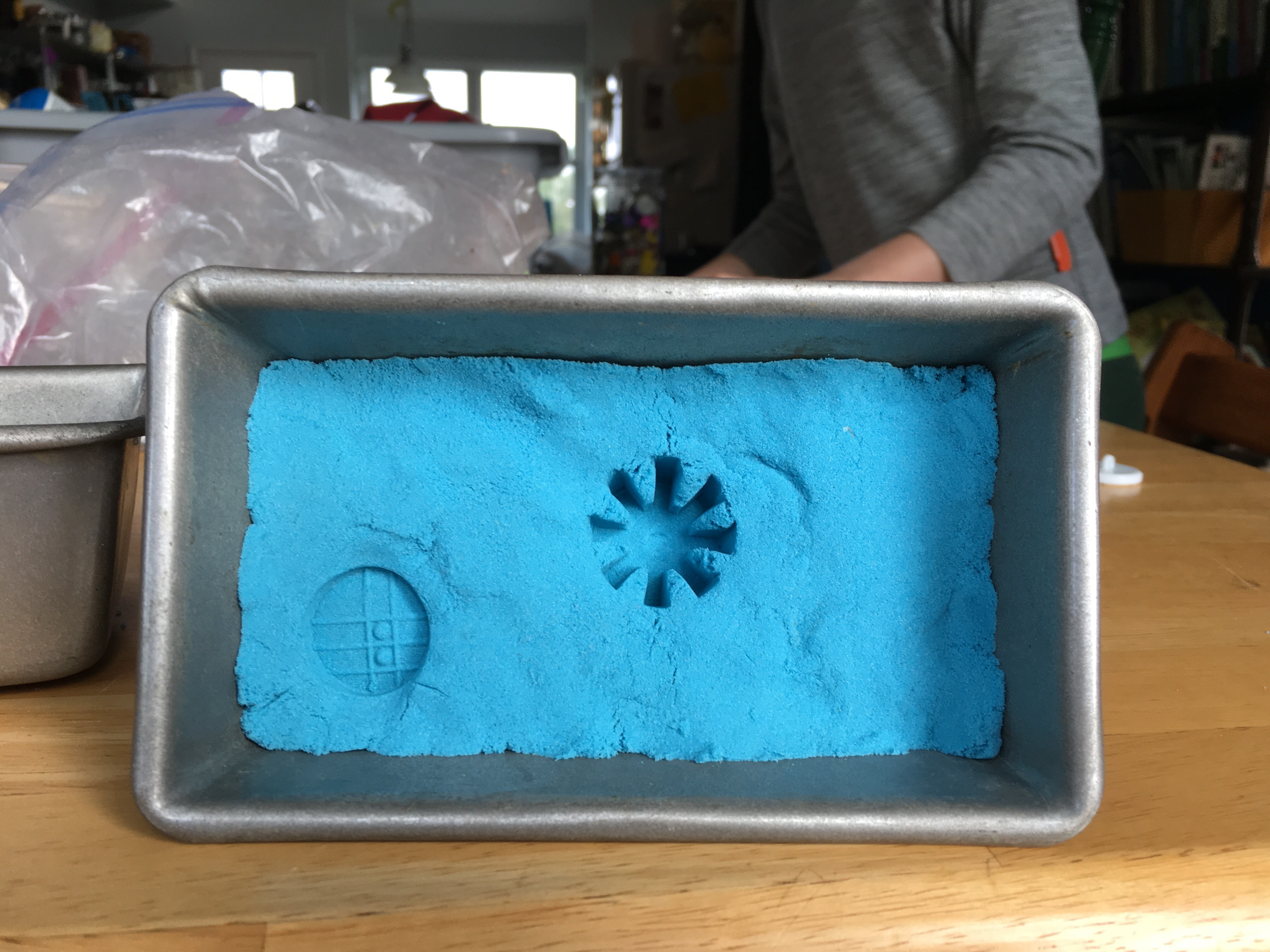
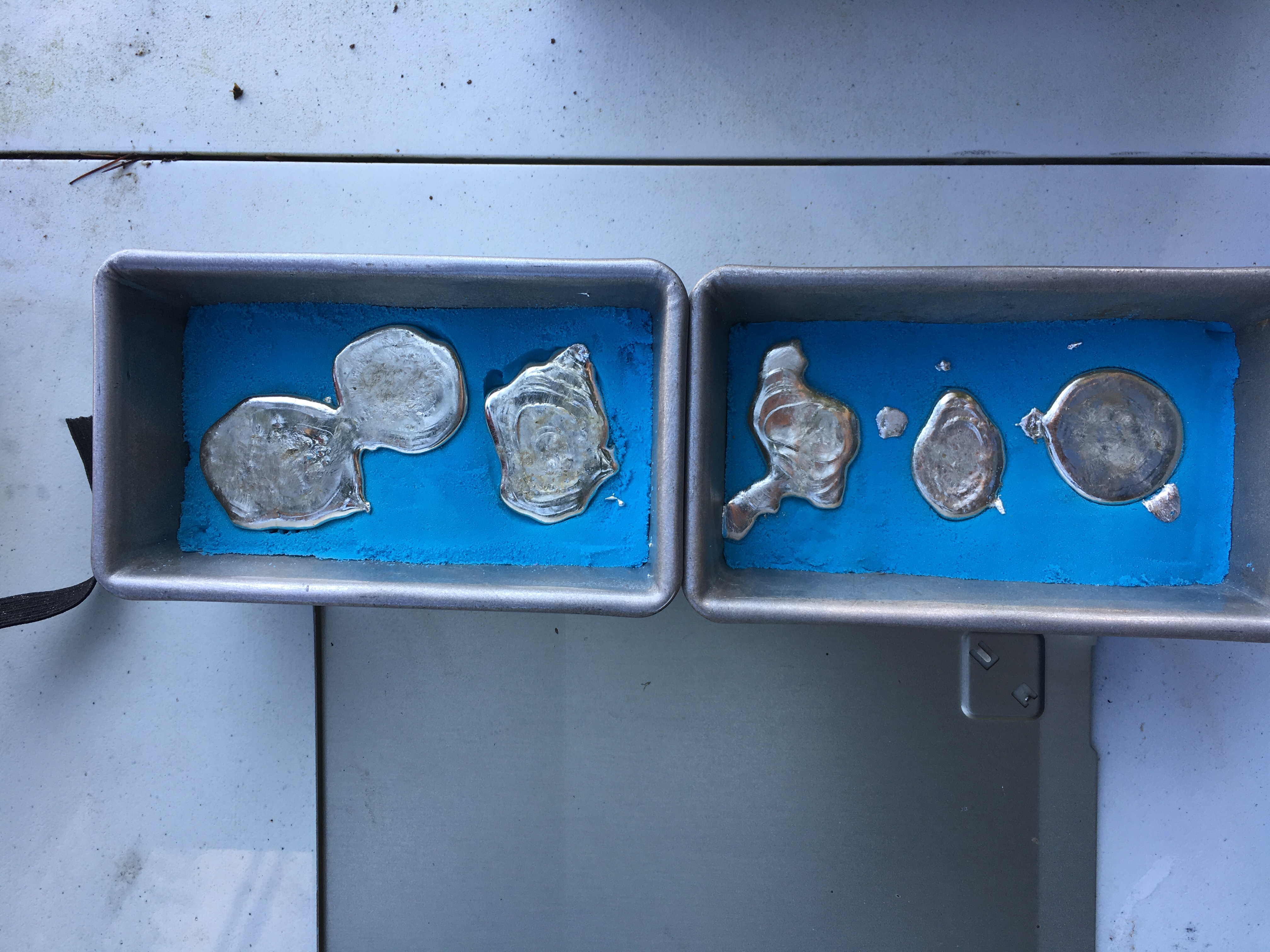
Today we experimented with casting tin. I’d read that you can cast into molds pressed into magic/kinetic sand, which is a fine sand impregnated with 1-2% dimethicone. The dimethicone helps it hold its shape for the casting.
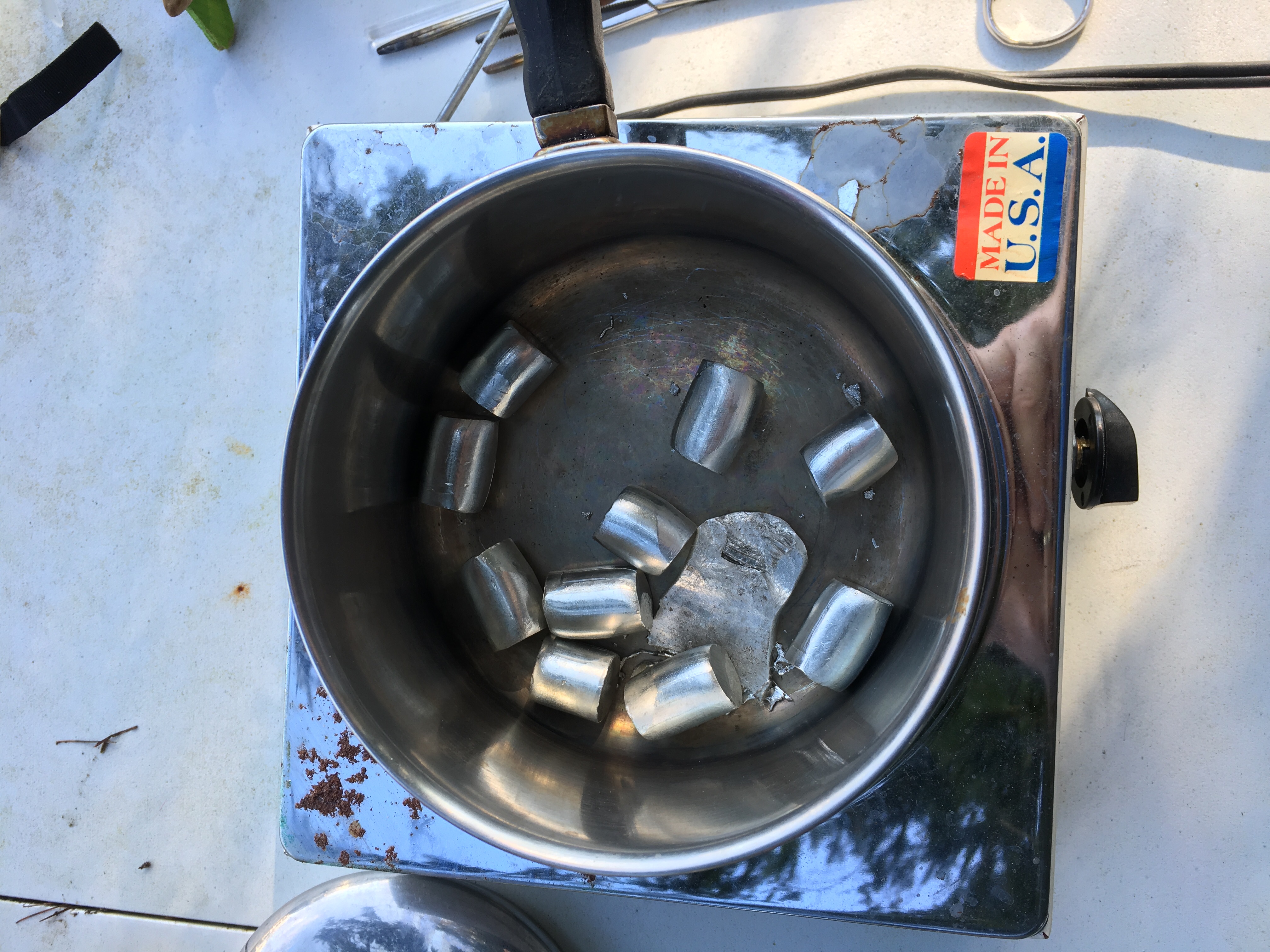
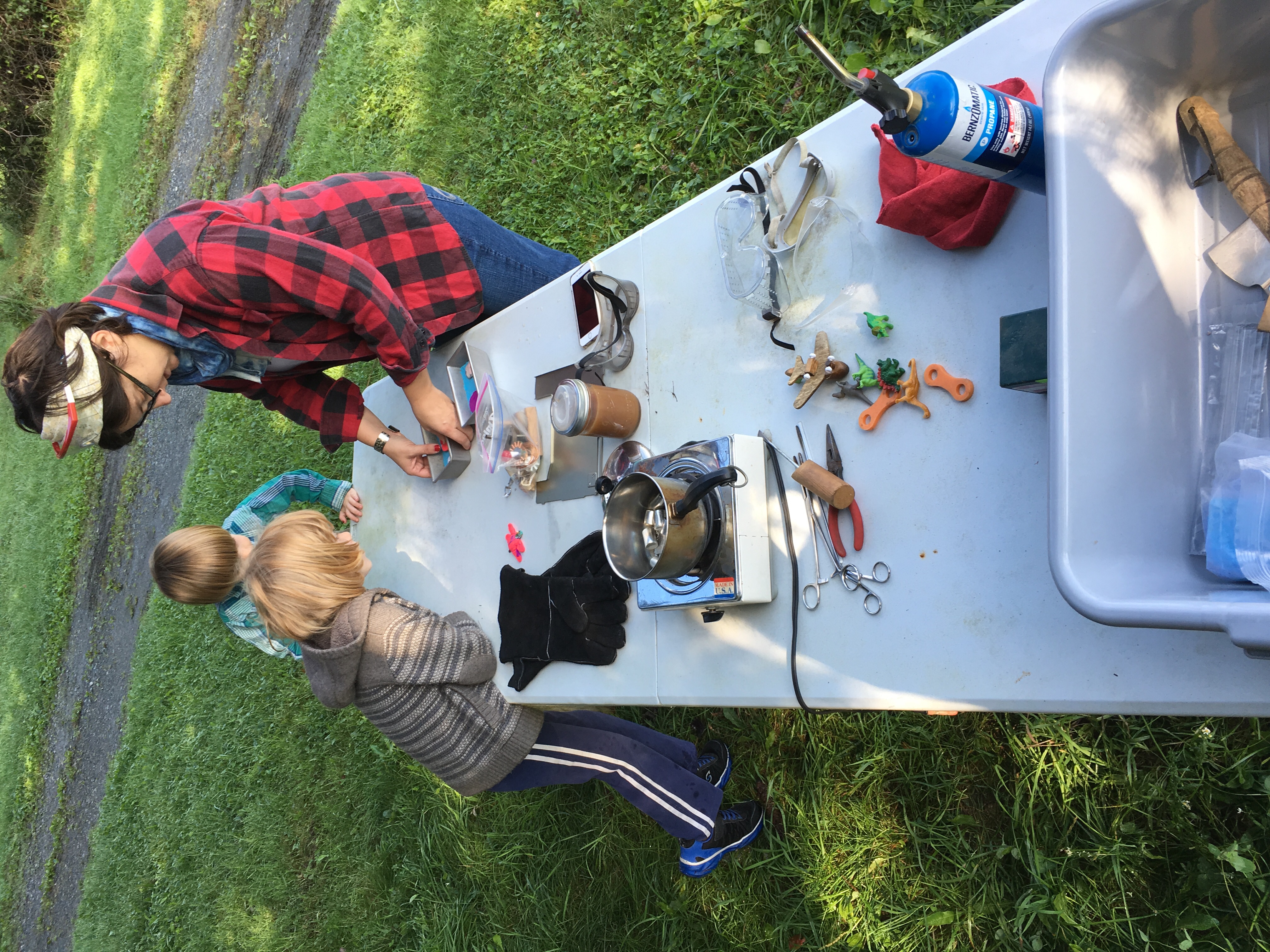
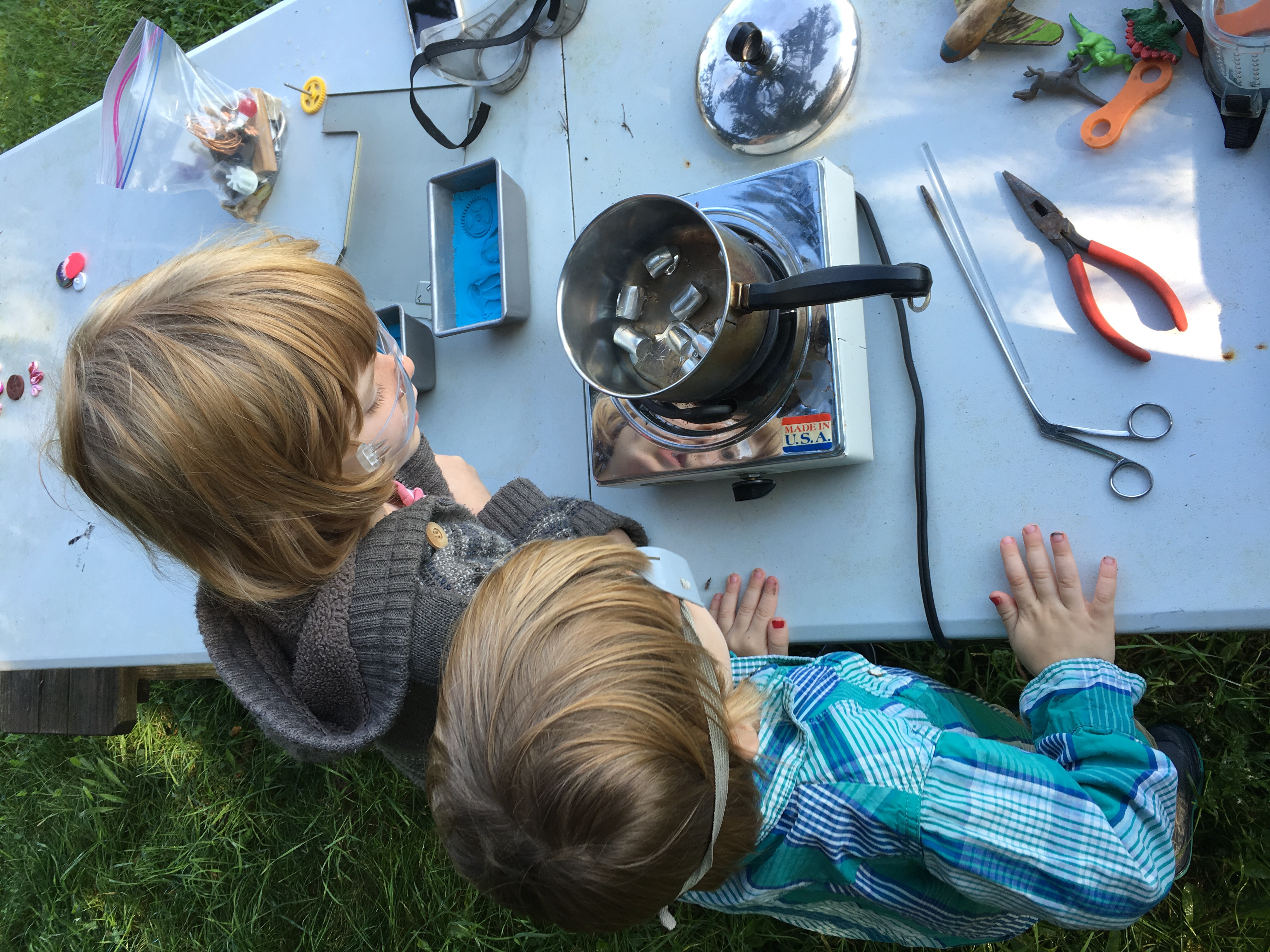
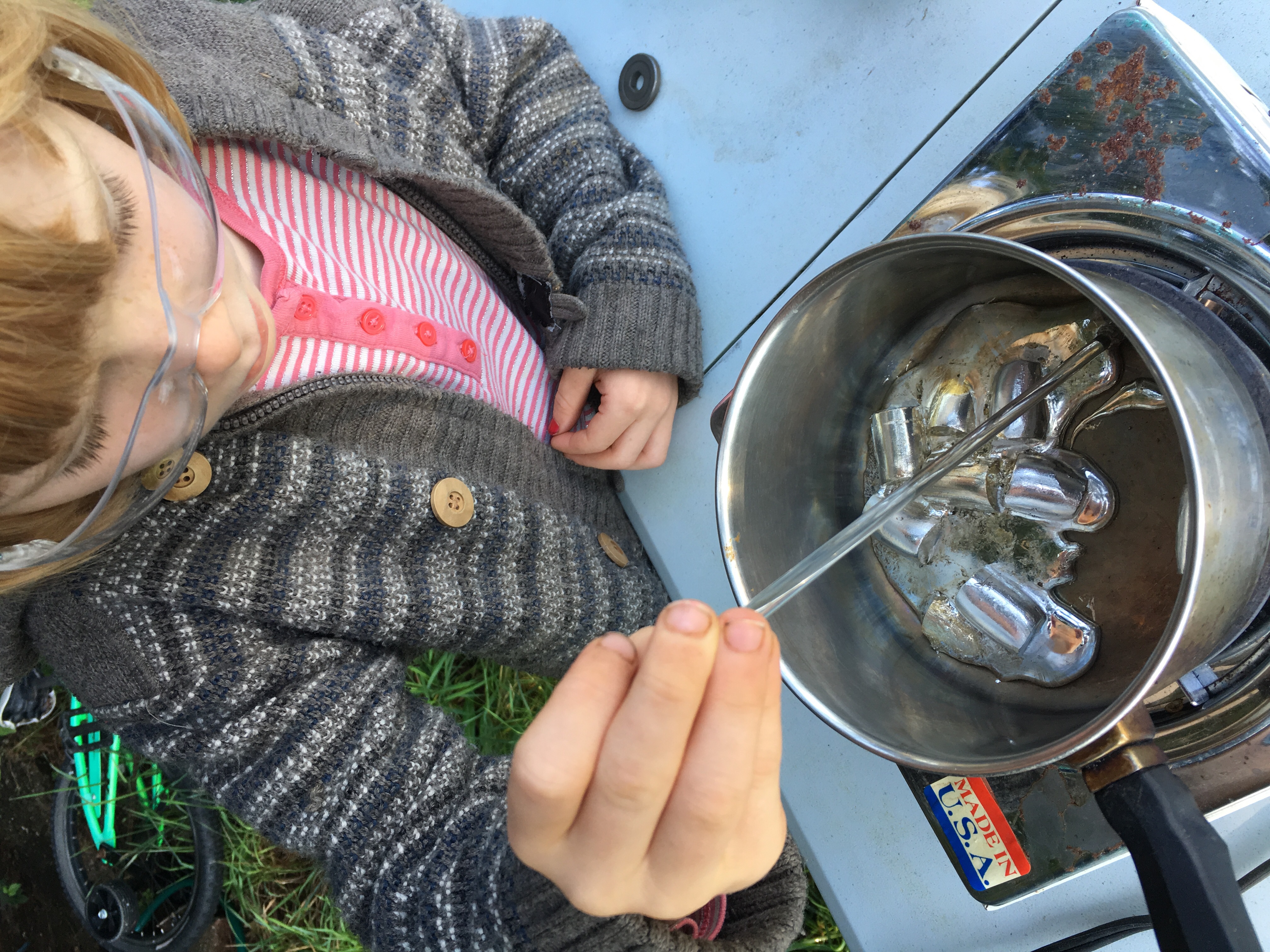
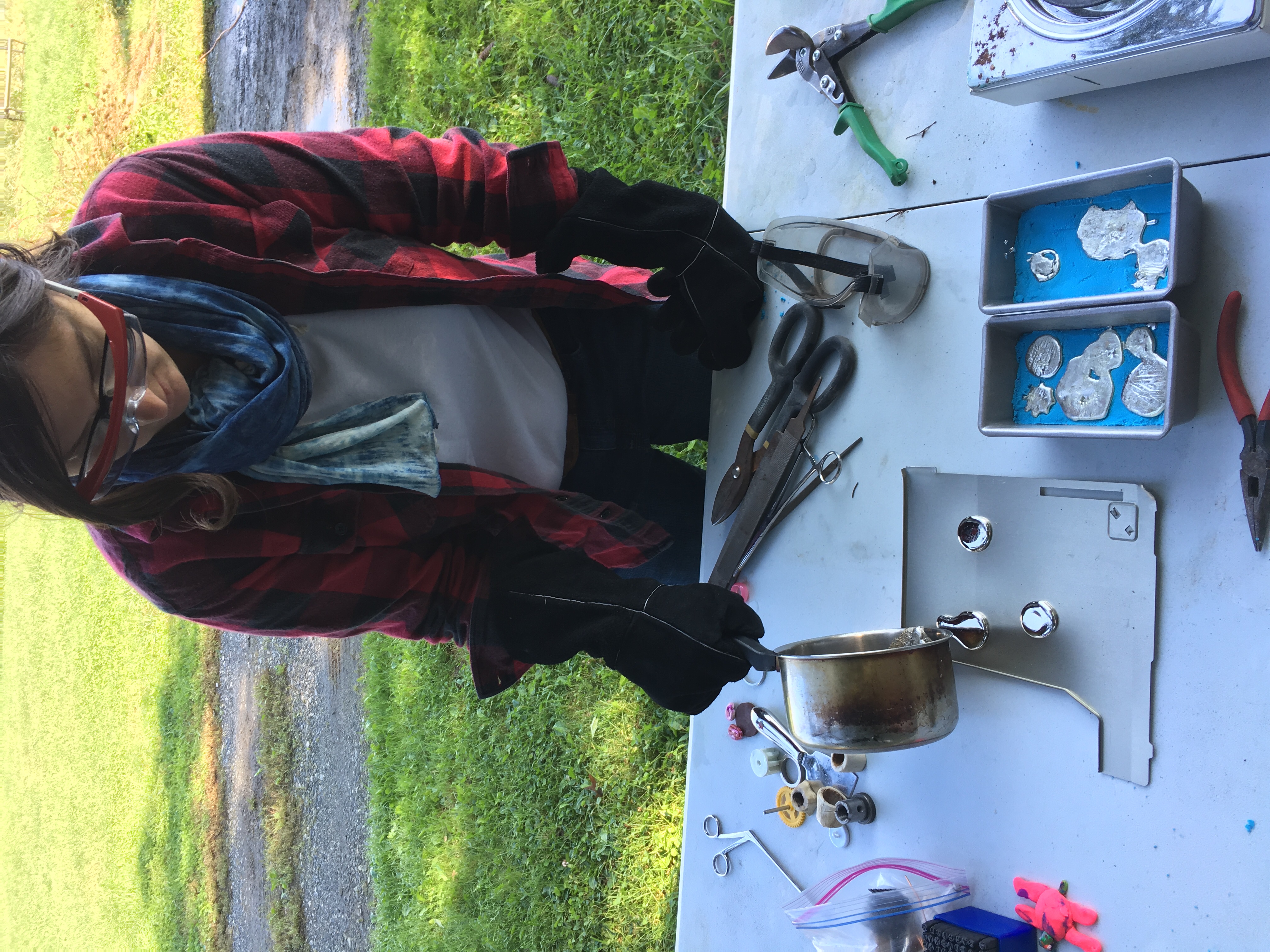
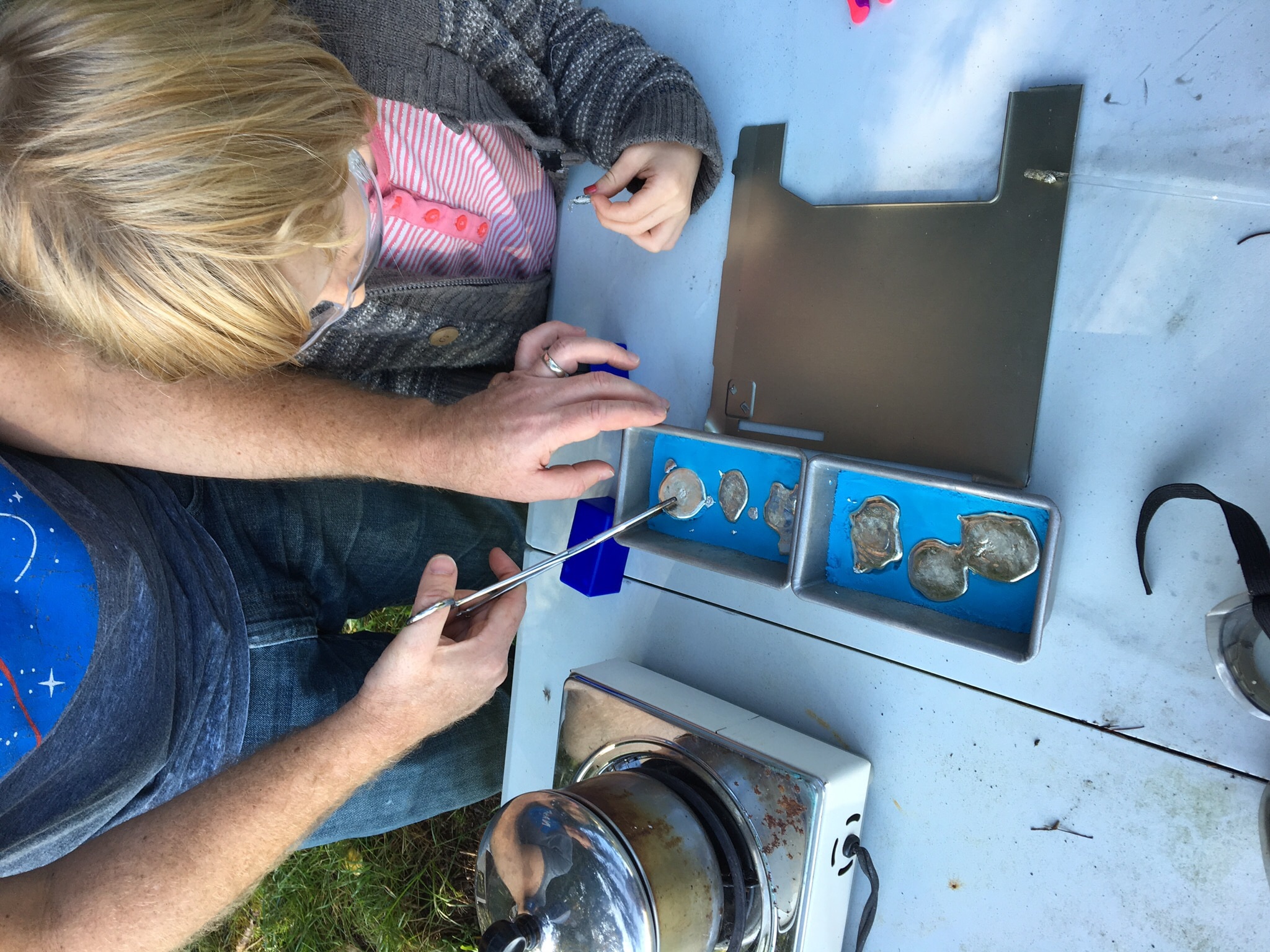
We melted 2 lbs of tin nuggets in a stainless steel pot from Salvation Army over an electric hot plate. The tin melted almost immediately once the pot got hot.
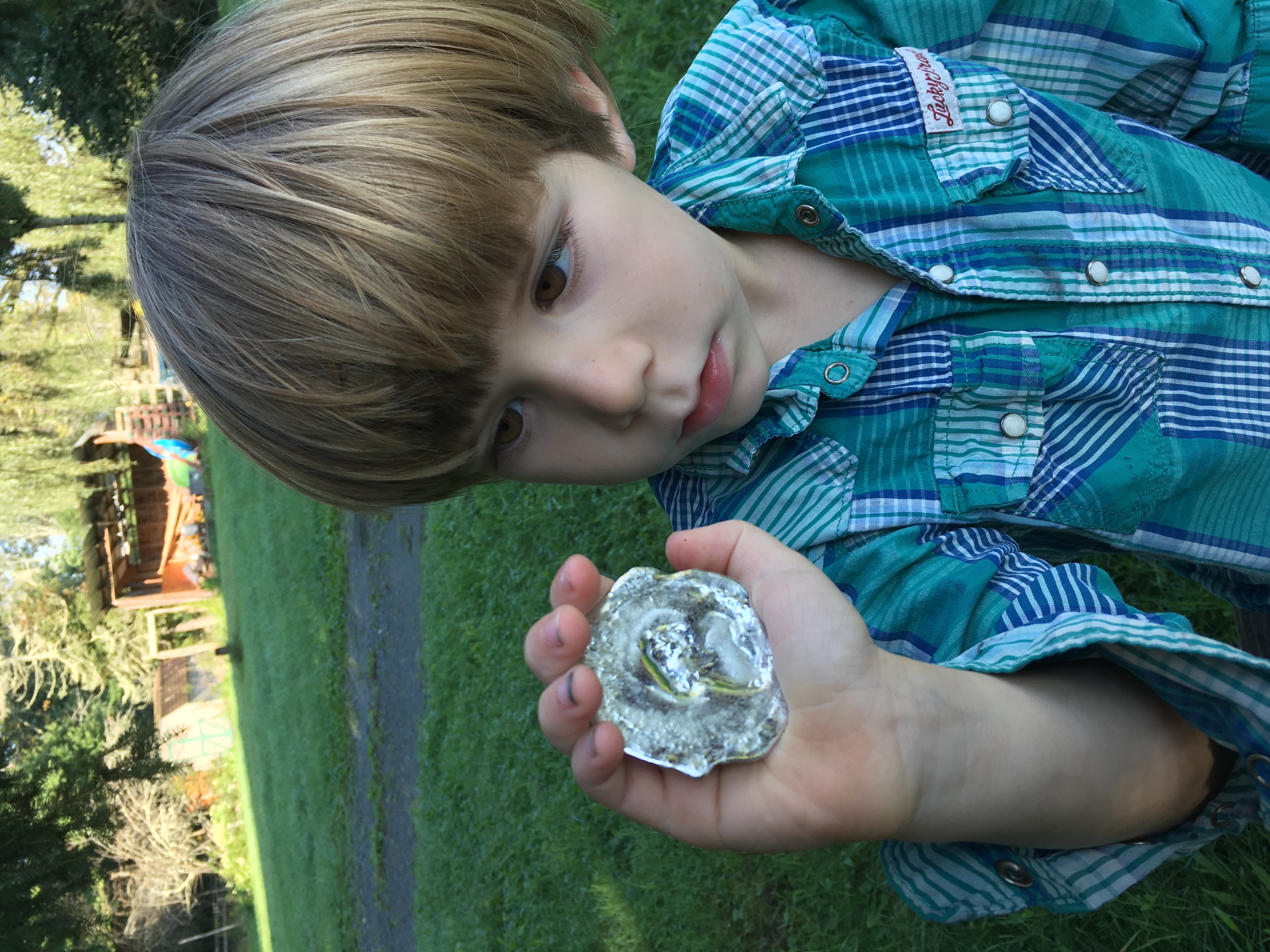
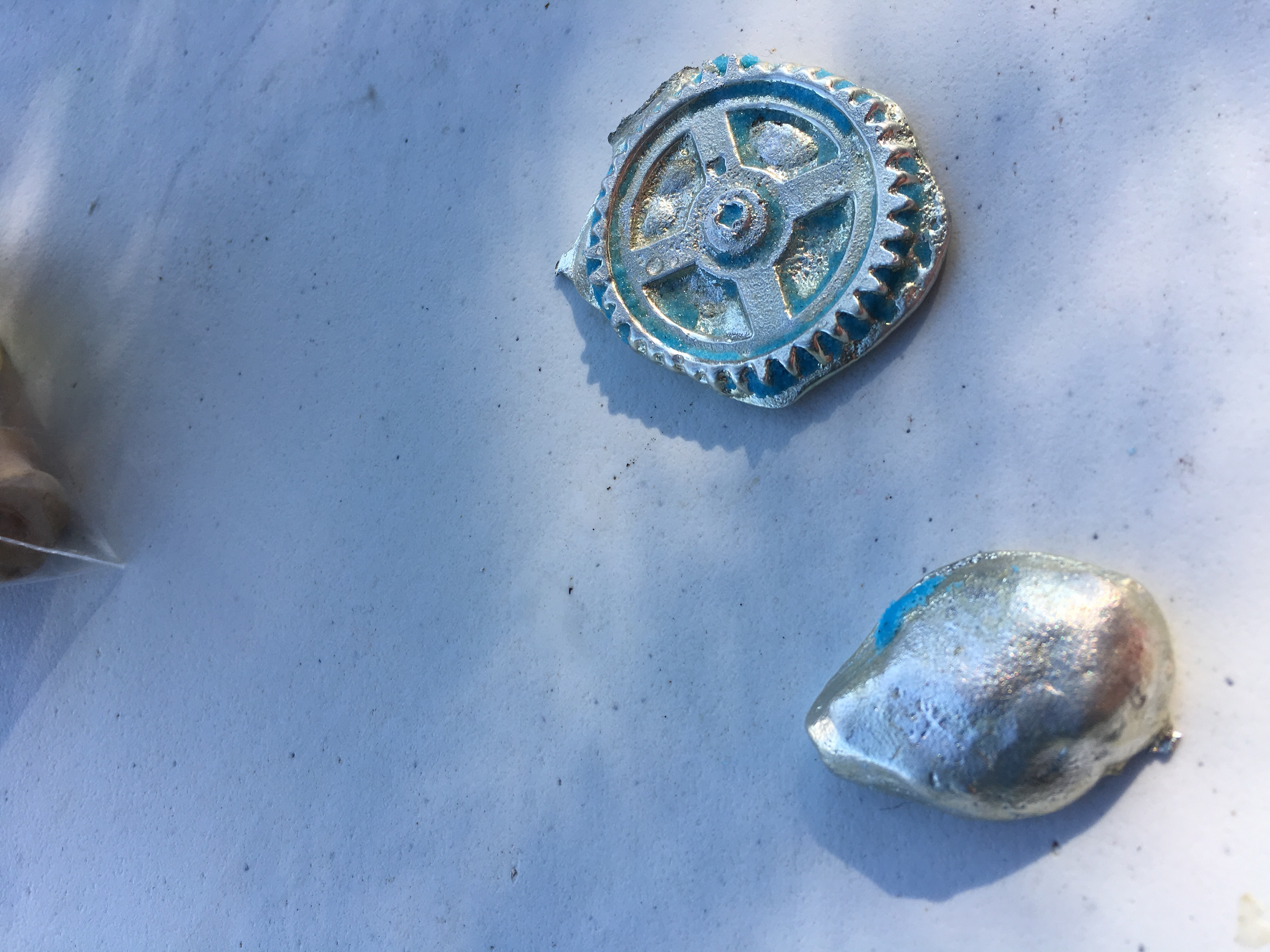
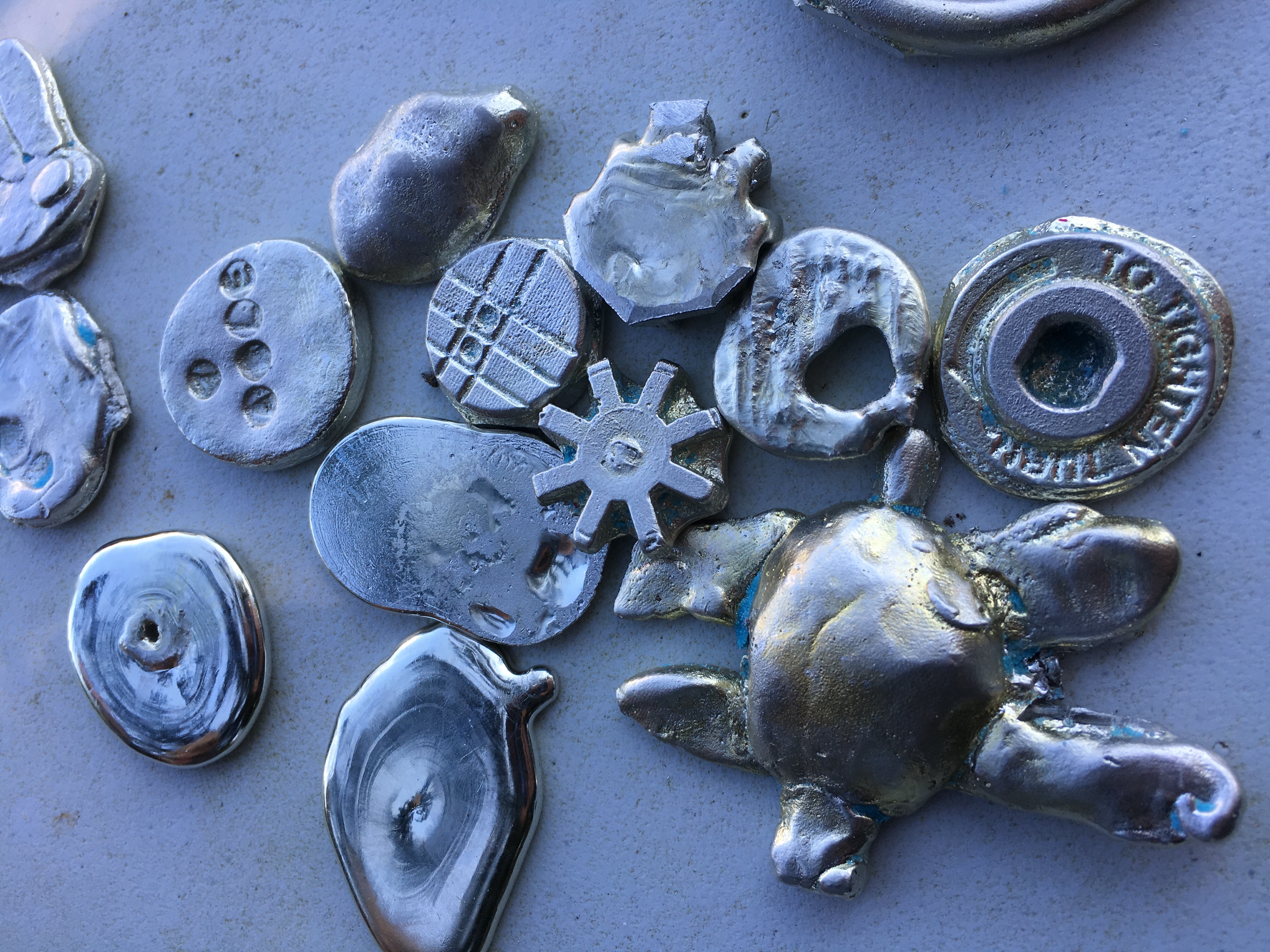
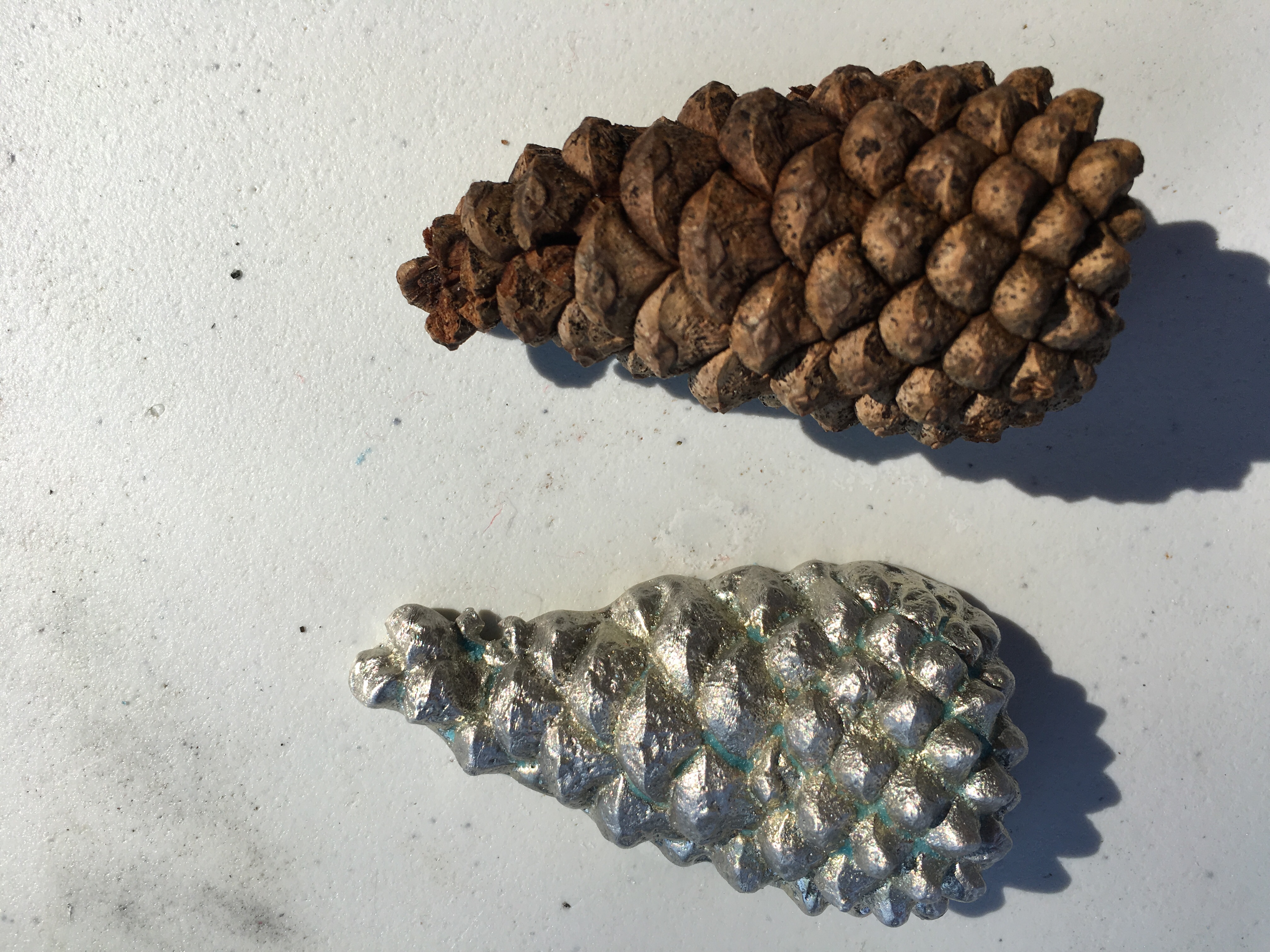
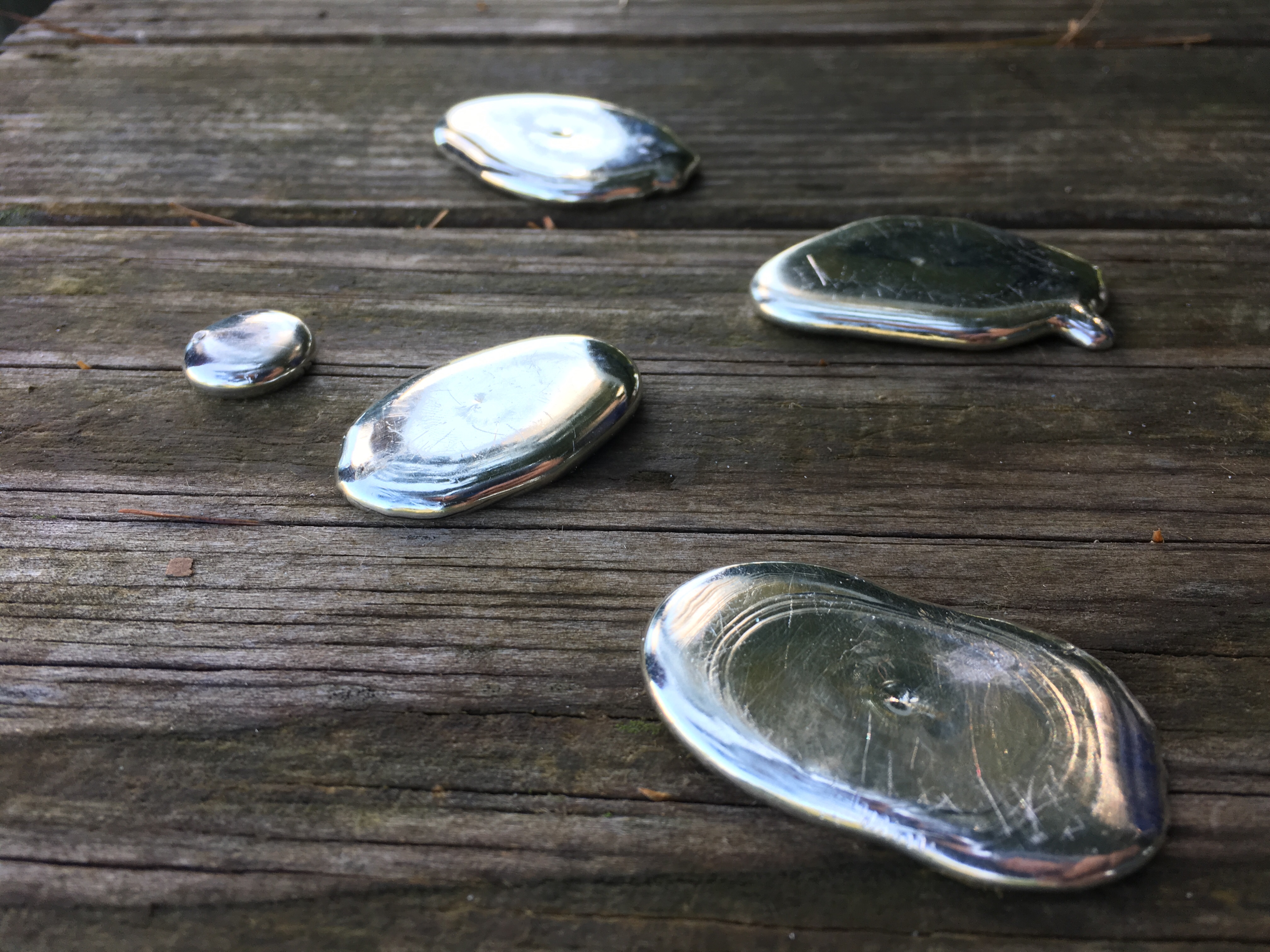
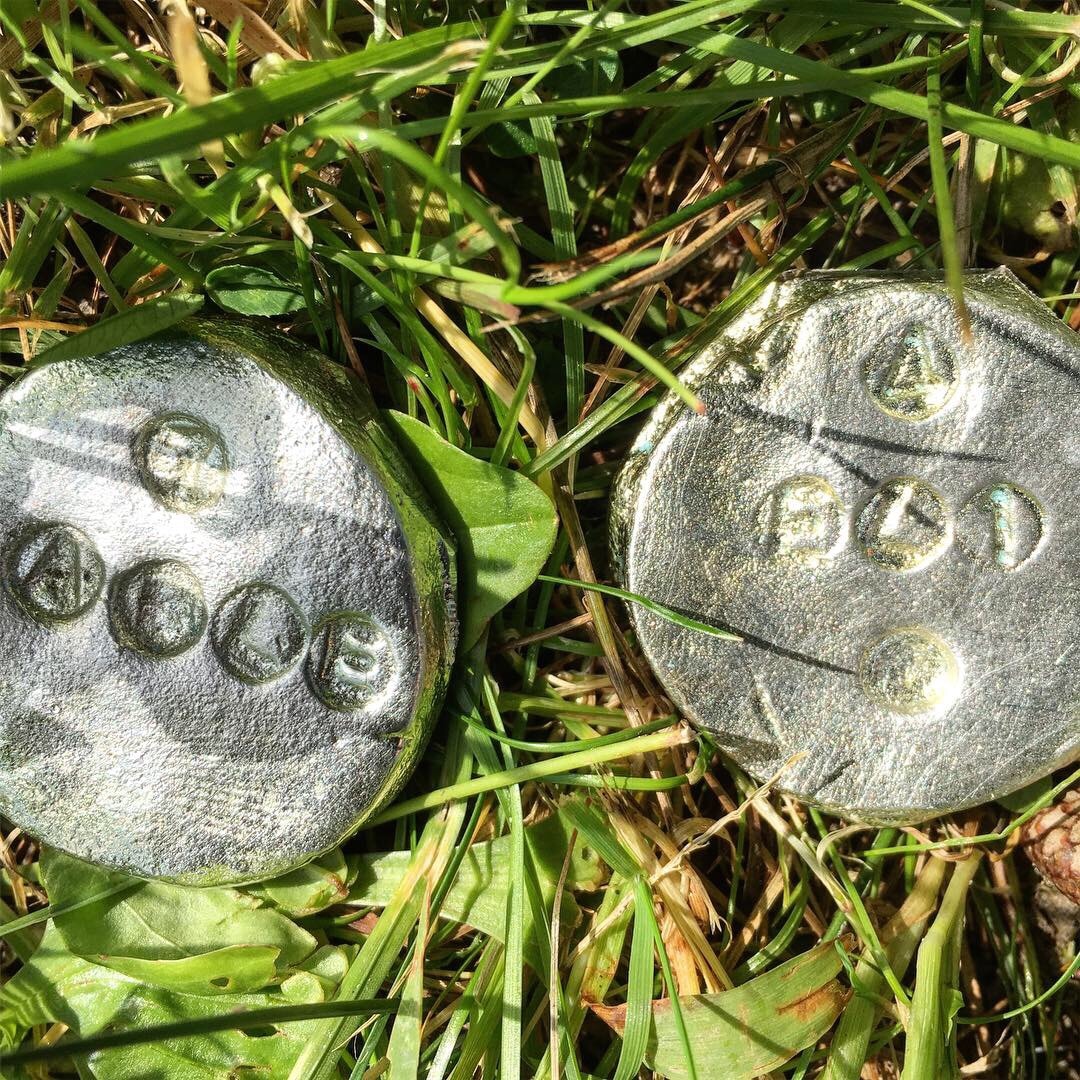
We’d made a few stamps out of polymetric clay that we baked, and used some found objects for the others. We cast rings, gears, a pinecone, animals, coins we’d stamped with the kid’s names, and made a number of “drops” where we just poured some tin onto a flat plate of metal.
Tin was incredibly easy to cast, and the kinetic sand molds worked very well. We can try lost wax or styrofoam in the future for more 3D shapes.
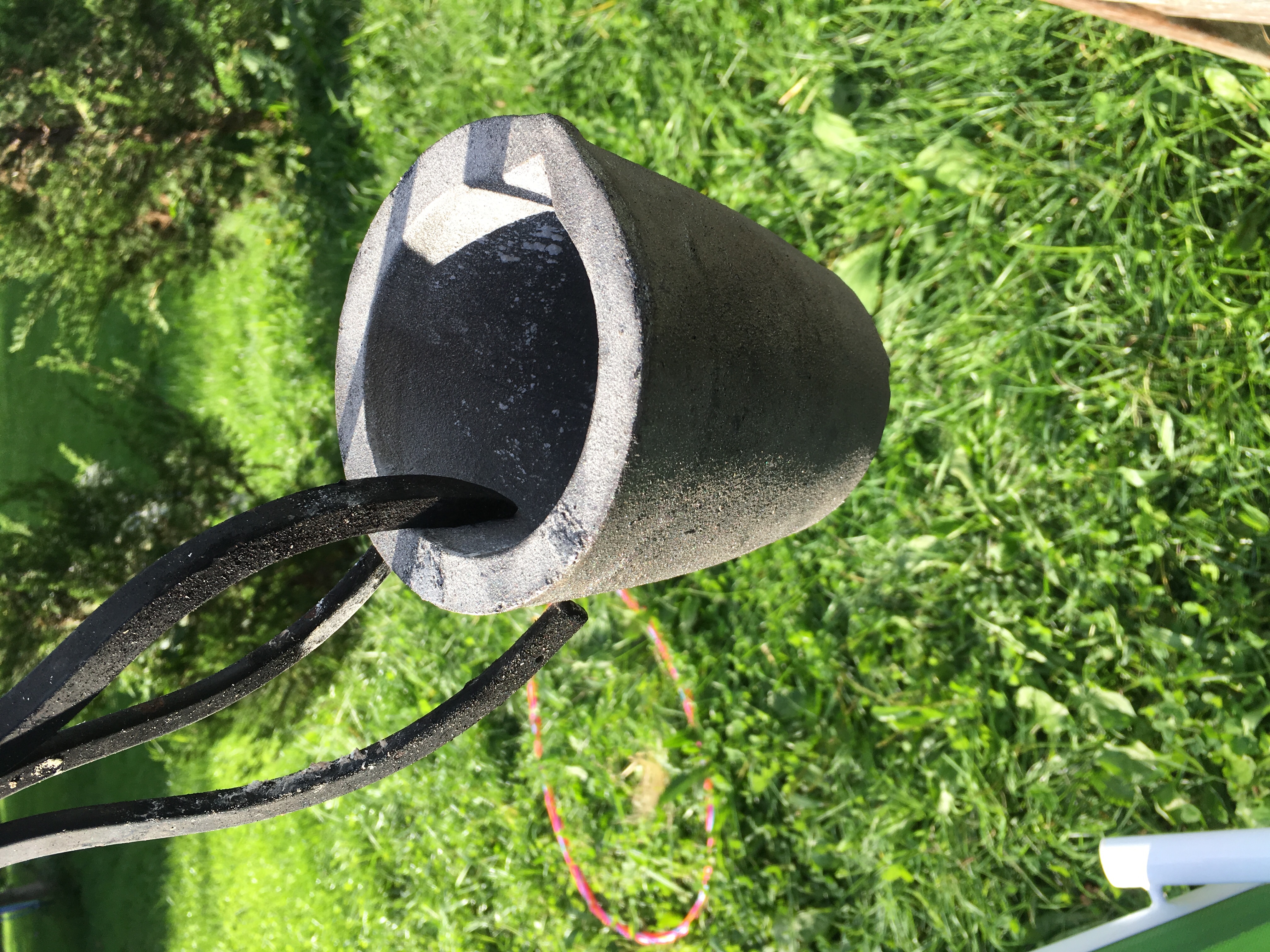
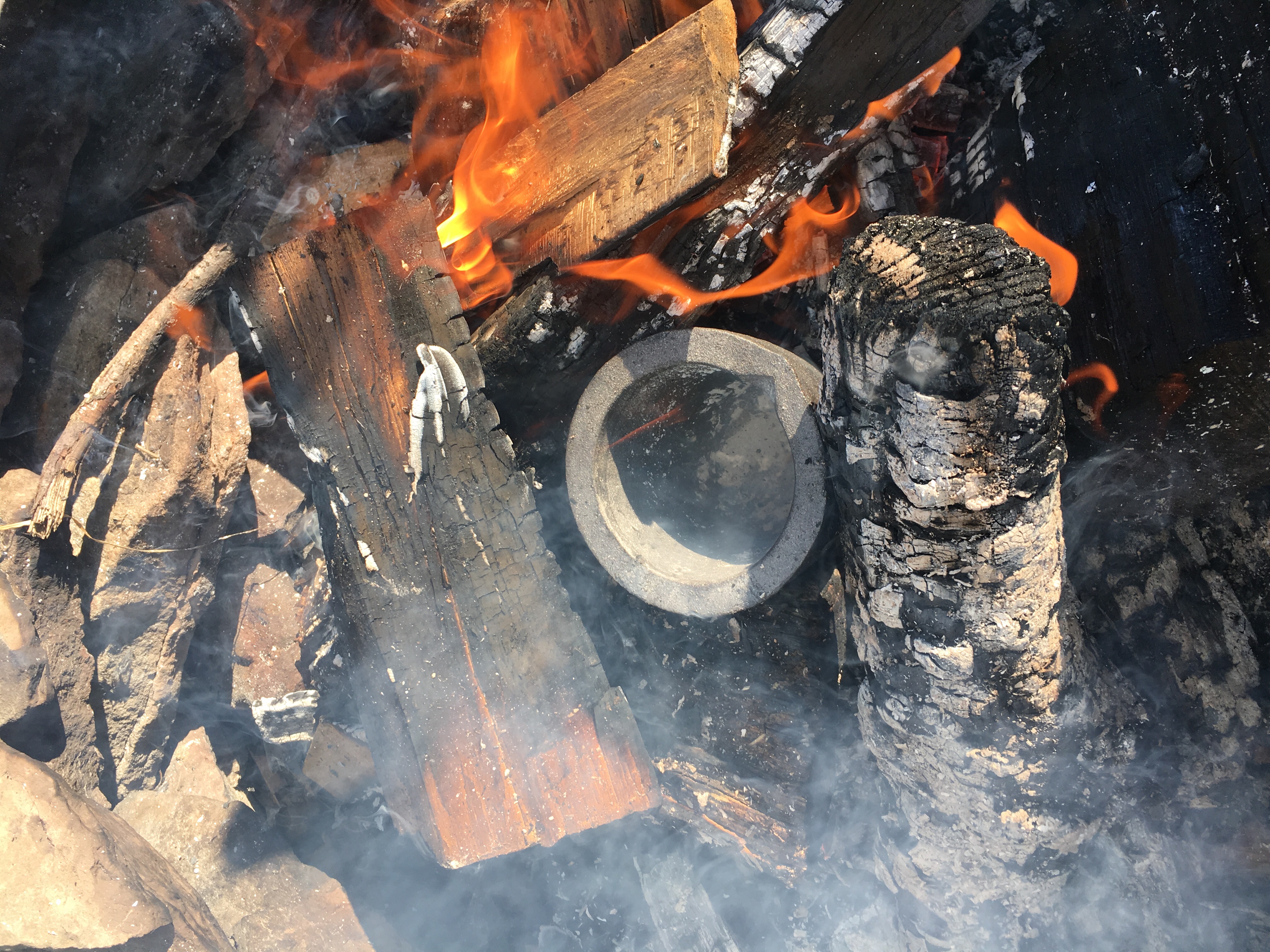
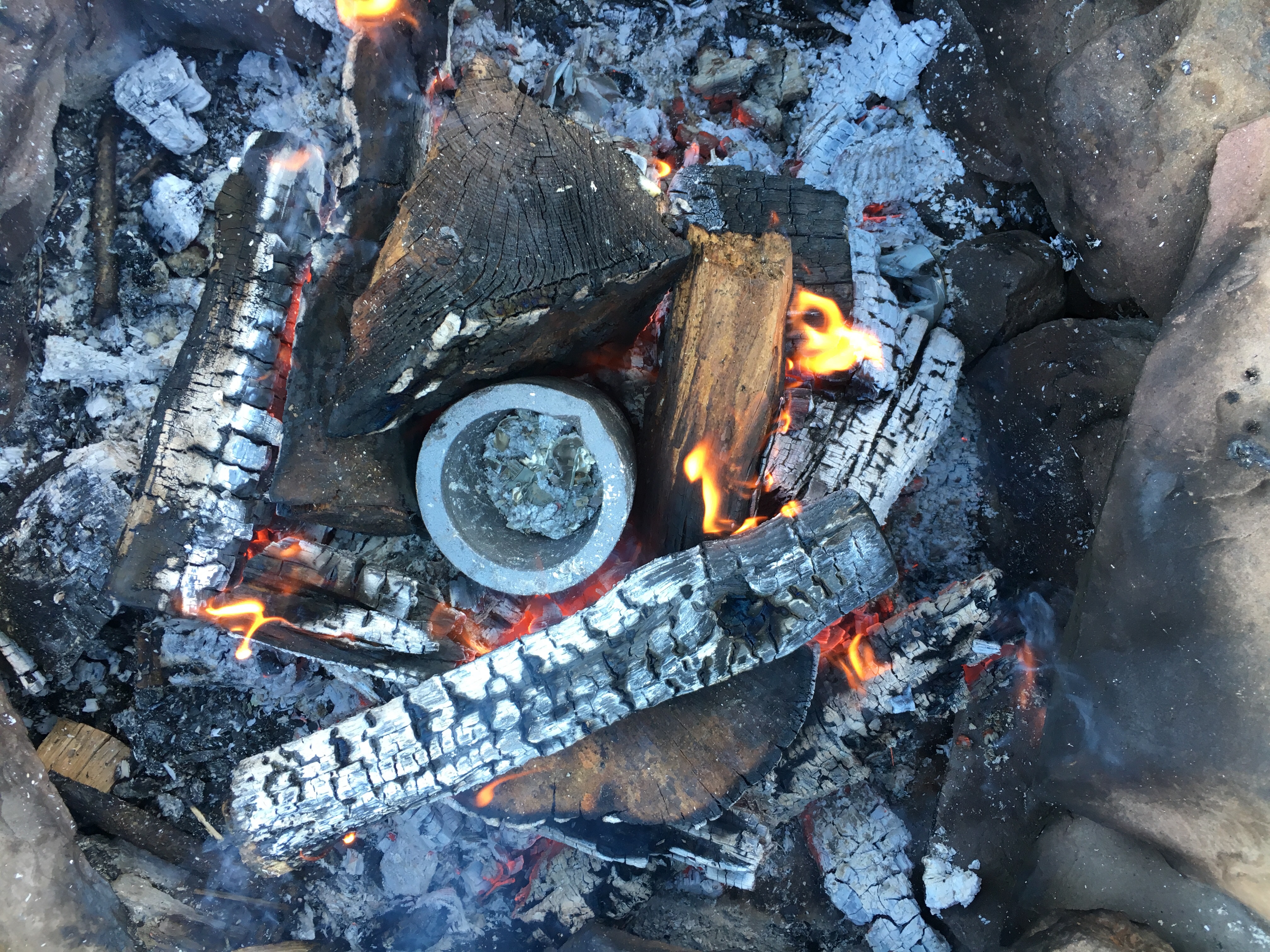
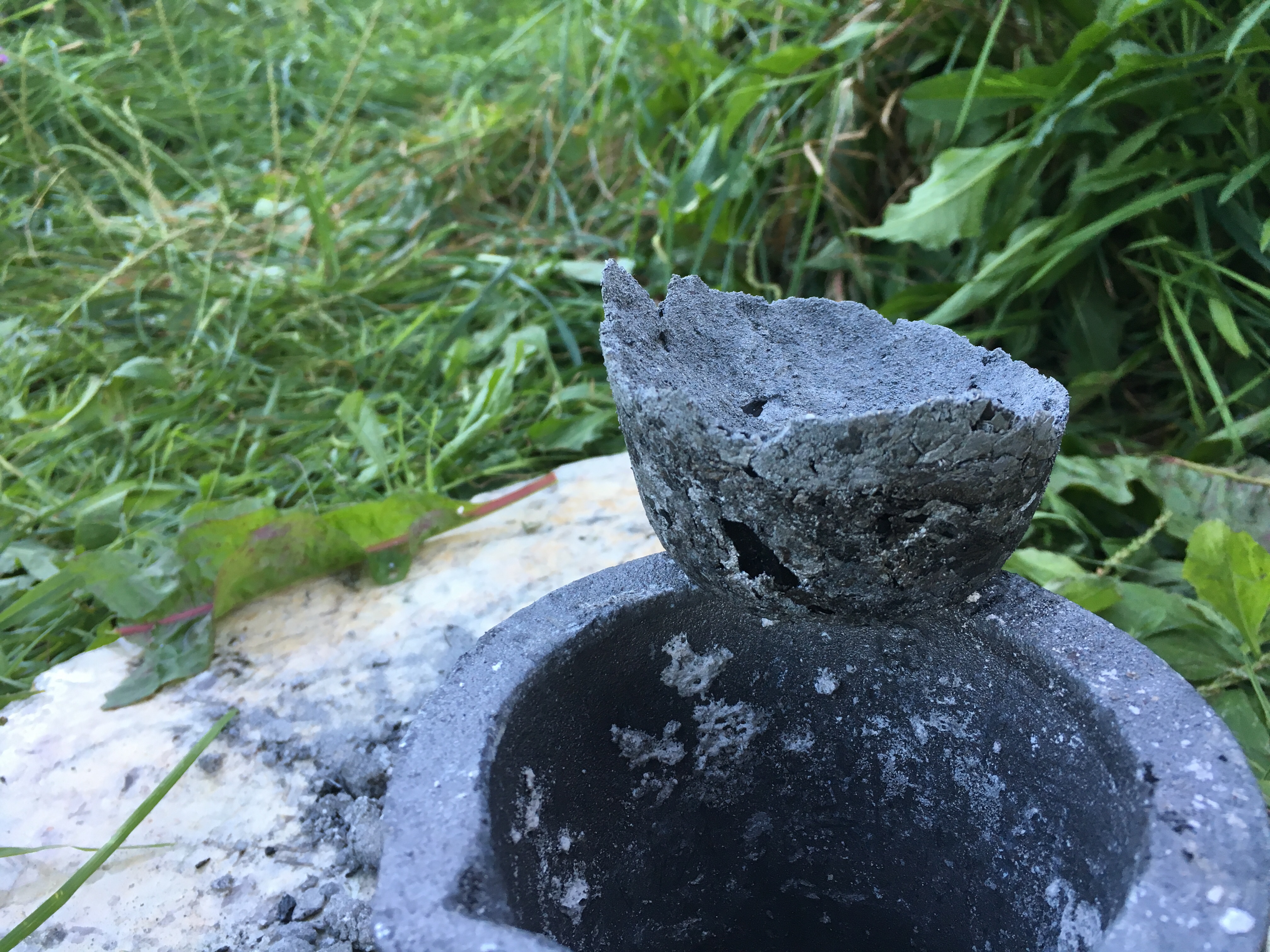
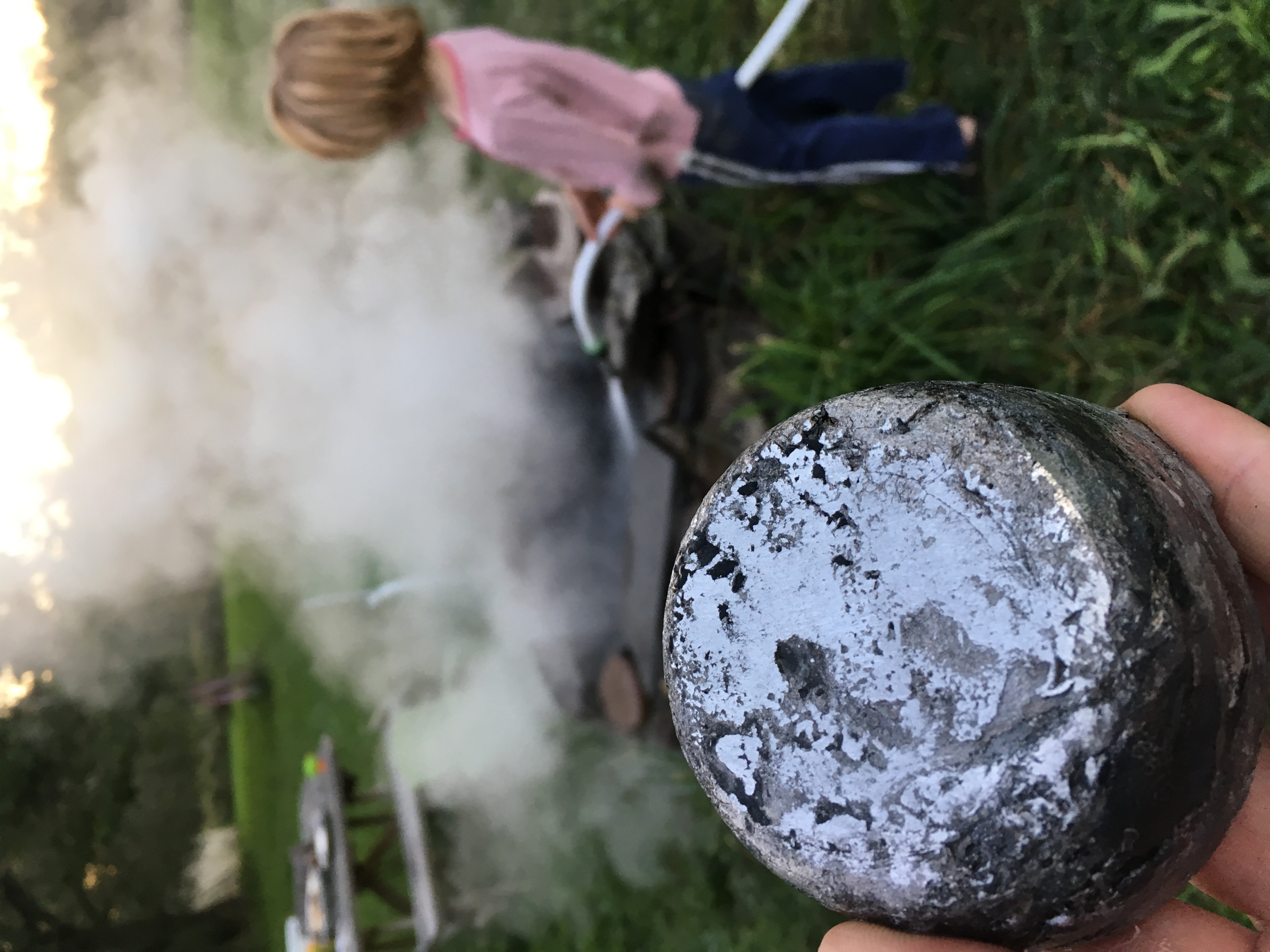
We also tried our hand at melting aluminum seltzer cans in a graphite crucible in the campfire. We tossed 20 cans into the crucible and at some point I saw liquid metal. The fire didn’t sustain the required heat, so after the first melt the rest of the cans ended up as a sort of paste, with a big wad of hardened aluminum at the bottom of the crucible. We finally pulled the crucible out of the fire, and after some banging, got the block of aluminum out. We may try the crucible with a torch next time to see if that can hold the heat better than an open fire.
We are not yet to the Bronze Age.